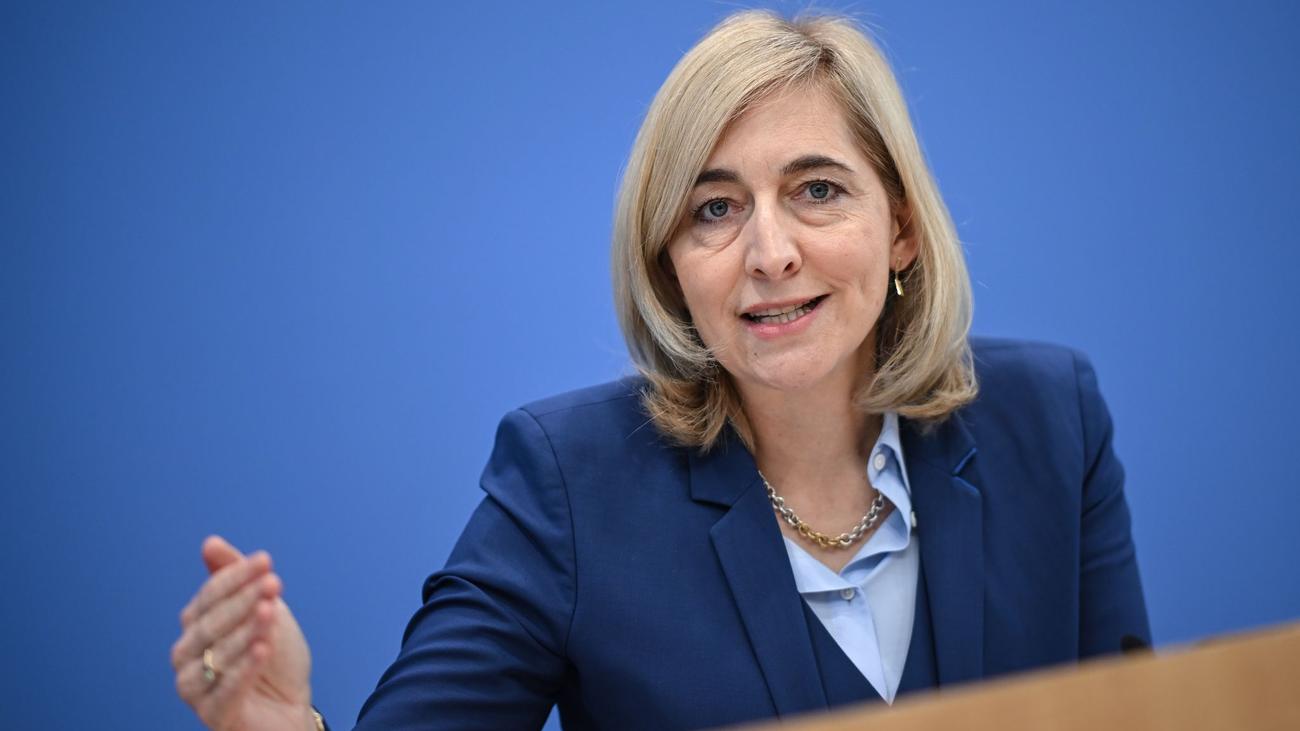
Federal Minister of Well being Nina Warken defends its financial savings plans to stabilize long-term care insurance coverage. “This isn’t a reform {that a} well being minister desires, as a result of it’s partly related to unavoidable hardship,” wrote the CDU politician in a visitor article for “Welt am Sonntag”. “However this reform is completely vital with a purpose to adapt one other pillar of our social system to the situations of our time.”
The Nursing care insurance was “a restructuring case with an announcement,” warned Warken. She referred to the anticipated monetary hole of seven.5 billion euros within the coming 12 months – with efficiency expenditure totaling 70 billion euros in 2025. “A monetary deficit of this magnitude can’t be closed by increasing the income aspect alone.”
Financial savings and extra earnings
The minister has offered a draft with spending brakes and extra earnings with a purpose to keep away from normal contribution will increase. Amongst different issues, the care contribution for childless individuals is to extend from 4.2 to 4.3 p.c. Necessities for classifications in nursing levels ought to change into stricter. Two cost-cutting measures are significantly controversial: Firstly, staggered surcharges for house residents, which cut back their very own contributions – sooner or later, increased surcharges will solely be paid after an extended time frame within the house than earlier than. Then again, pension contributions for caring kinfolk.
“In 2016, pension insurance coverage contributions had been paid for round 400,000 caring kinfolk, and in 2024 for 1.6 million individuals,” stated Warken. “Over the identical interval, expenditure elevated from lower than one billion to round 5 billion euros. On the subject of subsidies for nursing house residents, expenditure has doubled to over seven billion euros between 2022 and 2025.”
Deal with prevention
On the identical time, Warken emphasised that her proposal was not only a financial savings regulation, however relatively aimed toward a “paradigm change in care”. “Now we have to maneuver away from concentrating on offering look after these in want of care and in the direction of avoiding it extra.” The draft additionally strengthens house care and relieves the burden on these in want of care and their kinfolk. “On the one hand, we bundle the vary of providers which might be typically very differentiated and subsequently usually troublesome to penetrate and simplify them.” This may end in a noticeable improve in advantages for a lot of of these affected. “And we’re reorganizing care in acute disaster conditions: the purpose is to offer higher help by way of skilled care in acute conditions, for instance when kinfolk are unavailable.”
© dpa-infocom, dpa:260626-930-292414/1