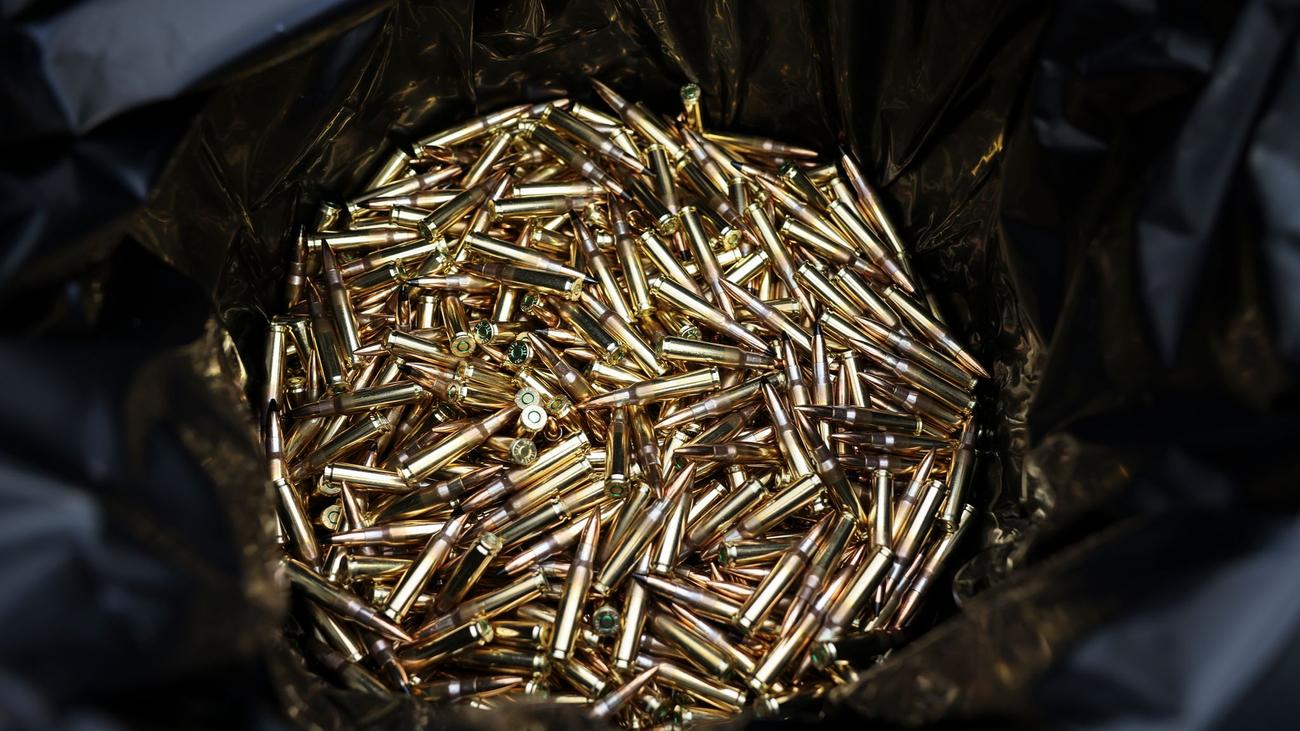
Rusted bombs, crumbling containers stuffed with grenades or warheads coated in algae lurk off the Baltic Coastline. With a purpose to get rid of the environmentally dangerous waste, particularly from the Second World Struggle, the ammunition is rendered innocent on the Society for the Disposal of Chemical Weapons and Armaments (Geka) in Munster. “Previous ammunition is more and more changing into a hazard to the surroundings, together with transport and wind farm growth initiatives,” says Andreas Krüger, managing director of the federally owned Geka.
1.6 million tons of outdated World Struggle II ammunition lie on the underside of the German seas. As a part of an emergency program, the Federal Setting Ministry has made funds amounting to 100 million euros accessible for the pilot restoration. Within the meantime it’s for them Baltic Sea It’s nicely documented the place which outdated ammunition is situated and what dangerous results can already be measured. There are mentioned to be round 450 accumulations within the Bay of Lübeck alone.
Pilot venture for disposal at sea
The concept of the pilot venture is disposal on an autonomous restoration platform immediately at sea. “This is a bonus due to the brief distances; we’ve no transport routes on land,” explains Krüger. “The venture is meant to indicate the European neighbors what is feasible.”
With a purpose to analysis how harmful the ammunition nonetheless is and what the salt water has accomplished to the casings over time, the Geka is inspecting 4 containers with dozens of explosive grenades from the Großklützhöved space close to Boltenhagen. “The ammunition might be deadly if I deal with it incorrectly,” says Philipp Höschele, lead fireworker for the delaboration. “I’ve nice respect for it.” Working with harmful items has even develop into a ardour for him.
The work is carried out till disposal within the blast furnace utilizing a respiratory masks, full physique swimsuit and gloves – the security precautions can’t be strict sufficient. “We’ve such quite a lot of ammunition that it by no means will get boring,” studies Höschele. Grenades, bombs and mines are a part of day by day enterprise.
50 grams of explosives are taken from every Baltic Sea pattern, packaged and transported to the Fraunhofer Institute close to Karlsruhe for additional investigations. The purpose is to find out whether or not the weapons have develop into extra delicate as a result of sea water.
Bundeswehr location close by
Proper subsequent to the Geka in Munster, the Bundeswehr maintains the biggest base of the German military. Along with the camouflage automobiles, vehicles from Dethlinger Teich in Heidekreis, just some kilometers away, drive alongside the broad roads on daily basis and ship dozens of outdated chemical weapons. After the Second World Struggle, massive quantities of ammunition comparable to poison fuel and explosive grenades had been thrown into the massive pond, after which it was crammed in.
© dpa-infocom, dpa:260502-930-22713/1