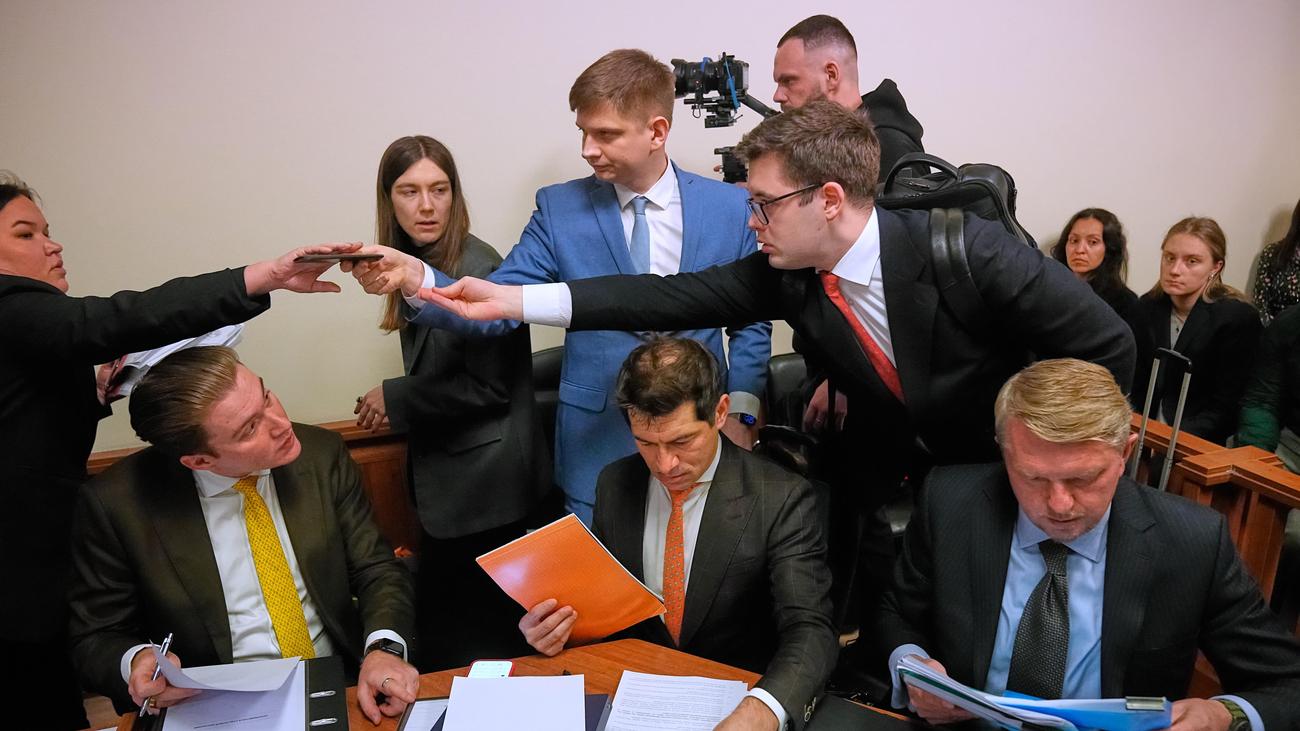
Russia has achieved its first success within the dispute with the European Union over frozen state property on account of the Ukraine struggle. A courtroom in Moscow sentenced the Belgian monetary service supplier Euroclear on Friday to pay damages of round 18.2 trillion rubles (round 215 billion euros). The courtroom thus upheld a lawsuit introduced by the Russian central financial institution. The decision is just not but closing.
Attorneys for Euroclear mentioned they might enchantment. They mentioned the proceedings, which occurred behind closed doorways, weren’t a good trial. The Brussels-based firm manages the vast majority of Russian property, which the EU as a sanction for Russia’s struggle of aggression in opposition to Ukraine for an indefinite interval.
The decision was broadly anticipated. Consultants assume that Russia is planning countermeasures in opposition to present European capital in Russia in response to the sanction. The courtroom ruling may now pave the best way for this.
The Russian central financial institution welcomed the ruling. She filed the lawsuit with the Moscow courtroom in December and demanded reimbursement of the greater than 180 billion euros of state cash that was in blocked Euroclear accounts. She additionally demanded an extra virtually 20 billion euros for misplaced income.
Second lawsuit in opposition to EU remains to be ongoing
One further lawsuit by the Russian Central Bank against the Council of the EU remains to be pending earlier than the European Courtroom of Justice in Luxembourg. Russia filed this second lawsuit on the finish of February. In keeping with the Russian information company Interfax, a verdict is anticipated on the finish of Could. It may set world requirements for coping with frozen state property.
The authorized dispute was triggered by a call by 25 of the 27 EU states in December. that they had decided against the will of Hungary and Slovakiato ban the retransfer of property held within the EU to Russia indefinitely. Because of the bulk choice, particular person international locations with a veto in opposition to EU sanctions choices can now not provoke the discharge of the frozen funds. Till now, the freeze needed to be prolonged unanimously each six months.
The EU is shifting in a legally troublesome zone as a result of the everlasting blocking of state funds is controversial below worldwide regulation. Russia’s central financial institution described the transfer as unlawful.