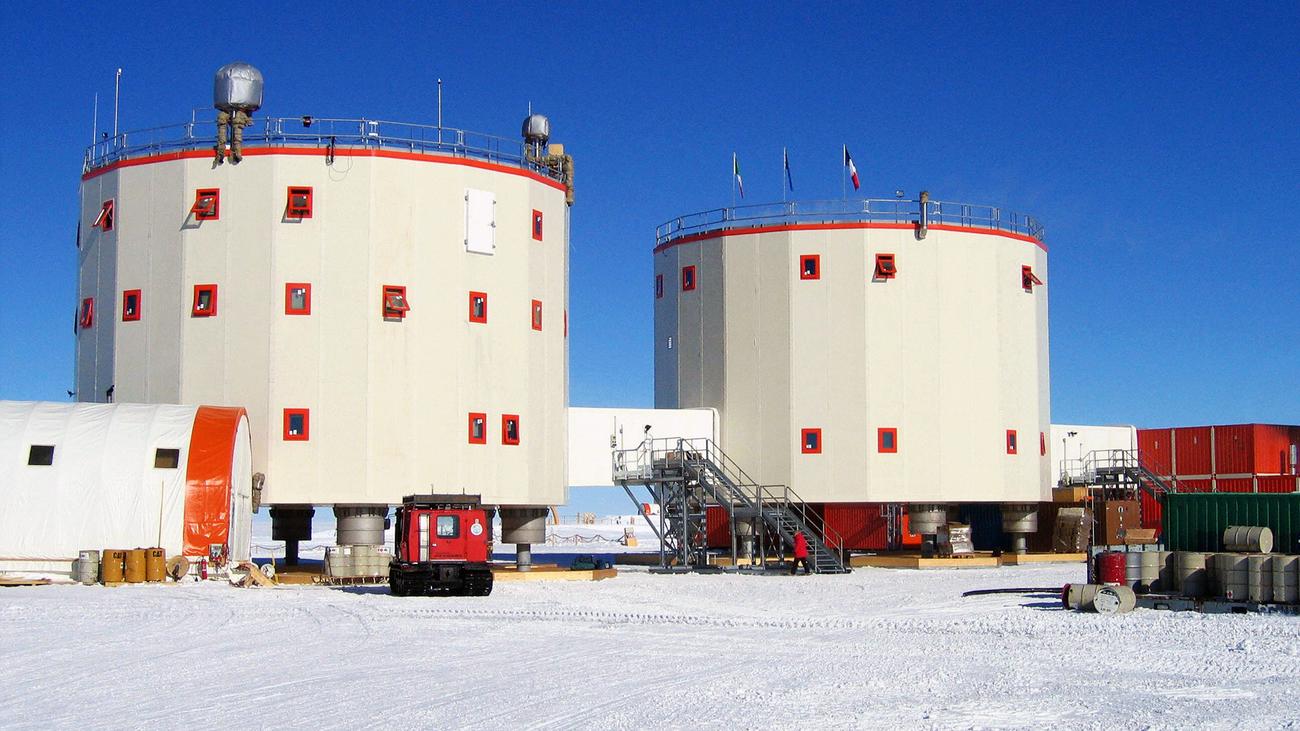

Residing and dealing in a small, remoted group has far-reaching results on psychological well-being. This emerges from a examine carried out by the crew of the French-Italian Antarctic station Concordia has investigated. »For an extended time period isolation Fixed closeness doesn’t essentially strengthen relationships, however can enhance tensions, distrust and psychological stress,” researchers from a number of universities – together with Zurich, Bern and Würzburg – reported within the journal PNAS.
The researchers examined the twelve-person crew of the Concordia for ten months. Because the station is inaccessible throughout the Antarctic winter from mid-February to mid-November, the crew lived and labored in full isolation. To analyze their state of affairs, the crew wore sensors that recorded after they met with whom and for a way lengthy, and so they stuffed out questionnaires a number of occasions.
Bodily proximity would not essentially have a optimistic impact
The central results of the examine is that Increase in lonelinessmistrust and battle, “whereas cohesion and efficiency decline,” wrote the College of Bern. The researchers additionally seen a rise in paranoia. After a number of months, some staff members believed that others had been speaking about them or watching them, mentioned psychiatrist Sebastian Walther. These folks assumed that the others wished to hurt them. Nonetheless, this type of paranoia is “removed from a paranoid persecution mania like in extreme psychological sicknesses,” added Walther.
The affect of bodily proximity on social dynamics was additionally examined within the examine. “Individuals with a whole lot of contacts reported extra usually conflicts, rising distrust and decrease efficiency,” mentioned the College of Zurich. It’s conceivable that lonely folks more and more sought contact, however this didn’t supply them enough help.
In response to the scientific staff, the examine outcomes are vital for future long-termSpace missions or different excessive working environments, comparable to on submarines or offshore platforms. “The outcomes present how vital it’s to acknowledge social dynamics early and to help groups in a focused method,” mentioned co-author Jan Fehl.