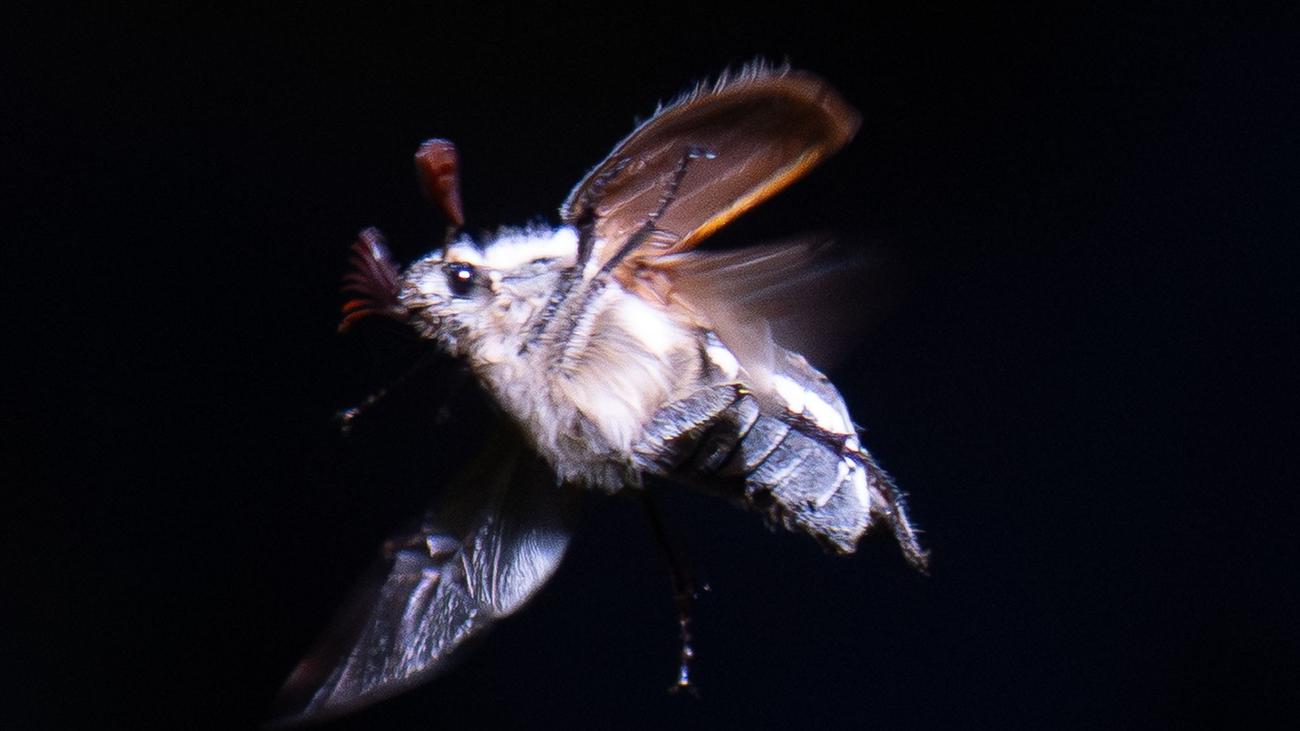
With the nice and cozy climate of the previous few days, the mass flight of cockchafers in southern Hesse is gaining momentum. Particularly within the night hours it buzzes and flies in forests within the Hessian Ried round Mörfelden-Walldorf and Darmstadt, mentioned Bernd Petri from the Nature Conservation Affiliation (Nabu) Hesse. The cockchafers swarm out at sundown and like to eat oak leaves.
The mass flight often happens each 4 years. It’s because the event cycle from egg laying by a number of levels from the grub to the completed beetle often takes so lengthy.
For the inhabitants within the Hessian Ried, the mass flight years are these in which there’s a soccer World Cup. Specialists anticipate an estimated half a billion animals by the start of Might in 2026.
The spectacle is one thing particular all through Germany. A mass flight of smaller magnitude is anticipated in Iffezheim, Baden. Different strains, similar to area cockchafers in Bavaria, will solely be accessible once more in different years.
Mass flight is an expression of an “ecological catastrophe”
“The cockchafer is benefiting from a man-made, ecological catastrophe within the Hessian Ried,” emphasised biologist Petri. The centuries-long drainage of the unique floodplain panorama created excellent situations for the bugs. The species requires dry, heat soils. There the females lay their eggs, from which grubs develop. Final fall, these larvae reworked into beetles.
Along with the drainage drawback, the Hessian Ried is severely weakened by the results of local weather change. Drought led to the demise of many bushes there. The cockchafers are inflicting further harm to the forest. Grownup animals eat the recent leaves and the grubs within the floor on tree roots.
© dpa-infocom, dpa:260425-930-990867/1